
PHOTO: The First National Congress of the 'Mir Međugorje' Information Center in Italy Opens in Gaeta
On Friday, November 6, 2026, the first Congress of the National Coordination for Međugorje opened in the Italian city of Gaeta. This event also marks the official commencement of operations for the 'Mir Međugorje' (Peace Međugorje) Information Center in Italy. The opening, held at the Hotel Serapo, was attended by the local Archbishop, Msgr. Luigi Vari; Fr. Danko Perutina; Fr. Miljenko Šteko; Vedran Vidović, Director of the 'Mir Međugorje' Information Center; Marco Mammoli, President of the 'Mir Međugorje' Information Center for Italy; and Cristian Leccese, the Mayor of Gaeta. The newly appointed Apostolic Visitor for Međugorje, Msgr. Francesco Cavina, sent a written message offering his greetings and a blessing to the participants.
Following an opening prayer, Archbishop Luigi Vari, Center President Marco Mammoli, and Mayor Cristian Leccese addressed the attendees. Marco Mammoli expressed great joy regarding the launch of the 'Mir Međugorje' Information Center in Italy, which will serve the Italian-speaking region. The Mayor welcomed everyone and expressed his pleasure that the first congress is taking place in Gaeta - a city that takes pride in its Catholic identity and is home to a beautiful shrine.
In his opening remarks, Archbishop Vari wished the participants a blessed experience throughout the three-day congress, which is being held within his archdiocese. The gathering began under the motto "Lord, increase our faith," and the first day was dedicated to gratitude and reflection on the fruits of Medjugorje spirituality in Italy.
Fr. Miljenko Šteko opened his presentation, titled "1981–2026: Medjugorje, a Source of Grace for Italy and the World", by sharing a memory from the early years of his ministry in Medjugorje. Drawing from the personal encounters with the individuals who returned to Medjugorje year after year, he highlighted a central theme: the true value of a pilgrimage is revealed in one’s life after returning home, through renewed prayer and a revitalized Christian life.
A special focus was placed on pilgrims from Italy. He recalled their early visits in the 1980s when the journey to Medjugorje involved traveling along unpaved roads, as well as the humanitarian aid they provided during the war in the 1990s. The fruits of these pilgrimages became evident within Italian parishes and families, leading to the formation of prayer groups and various charitable organizations. He also touched upon the international reach of Medjugorje by highlighting the Youth Festival, the youth gathering that brings together participants from numerous countries. He specifically pointed to the evening Eucharistic Adoration, identifying it as the very core of Medjugorje spirituality: an encounter with Christ through prayer and the Eucharist.
A significant part of the presentation was dedicated to the note "Queen of Peace," published by the Dicastery for the Doctrine of the Faith on September 19, 2024, with the approval of Pope Francis. The document acknowledges numerous positive spiritual fruits associated with Međugorje. Fr. Miljenko linked this Vatican note to the teachings of the Second Vatican Council regarding the listening to the Word of God, the Eucharist, and the role of the faithful in building peace.
The speaker referred to a 2020 study by Alessia Scaffi, which includes interviews with five Italian pilgrims who have visited Međugorje multiple times. Among them is Francesca, who shared how she and her husband, faced with his serious illness, found support through a renewed faith. Another interviewee, identified as Beatrice, described how she began to pray again in the midst of a family crisis. In the presentation, these experiences were framed as personal testimonies of grace received within the specific circumstances the individuals faced. Furthermore, Fr. Miljenko illustrated how the inspiration gained from a pilgrimage can translate into long-term service to others by citing the example of Magnus MacFarlane-Barrow. According to the account shared during the presentation, his experience in Međugorje motivated him to provide humanitarian aid during the Homeland War. This effort eventually grew into the organization Mary’s Meals, which today provides school meals to hungry children around the world.
In conclusion, he invited everyone to renew five practices, which he referred to as the "five stones." These include prayer from the heart, the Eucharist, reading the Holy Scripture, fasting, and monthly confession. He concluded his presentation with a prayer to the Queen of Peace for families, young people, and all those in need of comfort.
In his welcoming address, Fr. Danko Perutina thanked the organizers and everyone working with dedication to spread the spirituality of Međugorje. He noted that the participants had gathered to reflect together on what God is doing in people's hearts through the experience of Međugorje.
"Međugorje is not merely a place to visit, but rather an invitation to change one's life. It is a school of prayer, a school of conversion, and a school of peace," said Fr. Danko. He emphasized that the spiritual fruits of Međugorje are passed on to new generations and the modern world primarily through one's own personal witness: by living out peace, through prayer, and through daily conversion.
"Dear friends, the center of Međugorje is not Međugorje itself. The center is Jesus Christ!" he pointed out, reminding everyone that Mary always leads us to her Son. He encouraged the participants to let themselves be guided throughout the congress by communion with Christ and the Church, a sense of responsibility in conveying the Gospel message, and the mission of bringing Christ’s peace into families, communities, and society.
"We are not called merely to speak about Međugorje; we are called to live what we have learned in Međugorje!" concluded Fr. Danko, wishing everyone a congress filled with grace, fraternal communion, and spiritual fruits. In a written message, the newly appointed Apostolic Visitor for Medjugorje, Msgr. Francesco Cavina, commended the choice of the congress theme. He emphasized that love and devotion to the Mother of God should lead toward a full life in Christ, just as Mary herself lived, and as she desires for every believer.
"This is a wonderful program for the spiritual life; I assure you of my prayers that this Congress will lead you to an ever more radical and profound adherence to Christ through the Virgin Mary," wrote Msgr. Cavina. He extended his blessing and warm greetings to all participants, expressing his hope that he might soon be able to greet them in person.
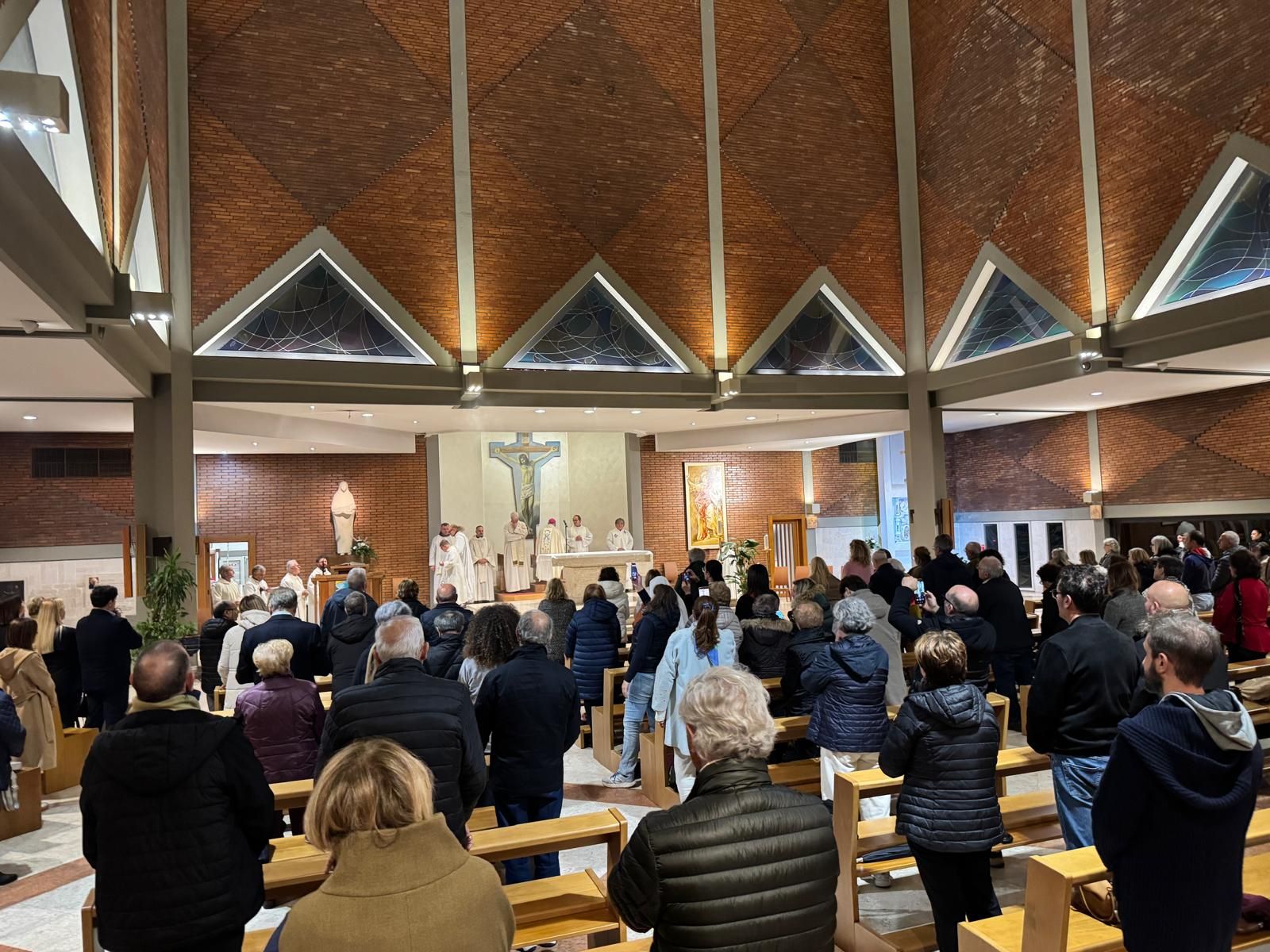
The prayer program continued at the Church of St. Paul, where, following the recitation of the Rosary, the Holy Mass opening the congress was celebrated. The Eucharistic celebration was presided over by the local archbishop, Msgr. Luigi Vari. In his homily, he invoked the blessing of the Queen of Peace upon all participants, noting that he considers this congress to be of great importance for the mission of the 'Mir Medjugorje' Information Center in Italy.
The first day of the congress concluded with a devotion to the Cross, led by Fr. Primo Martinuzzi at the renowned Sanctuary of the Most Holy Trinity at Montagna Spaccata in Gaeta. All participants descended to the Chapel of the Crucified One, situated within the central fissure of the rock face.
The sanctuary, which dates back to the 11th century, has served as a place of pilgrimage and prayer for centuries. What makes it unique are the deep fissures in the cliffs above the sea, fissures that, according to Christian tradition, came into existence at the moment of Jesus’s death on the cross. The Chapel of the Crucified One was built upon a large stone block wedged between the cliffs, some forty meters above the sea, making this site a particularly striking space for prayer and contemplation of Christ’s Passion.